All content on this site is intended for healthcare professionals only. By acknowledging this message and accessing the information on this website you are confirming that you are a healthcare professional. If you are a patient or carer, please visit the International Myeloma Foundation or HealthTree for Multiple Myeloma.
The Multiple Myeloma Hub website uses a third-party service provided by Google that dynamically translates web content. Translations are machine generated, so may not be an exact or complete translation, and the Multiple Myeloma Hub cannot guarantee the accuracy of translated content. The Multiple Myeloma Hub and its employees will not be liable for any direct, indirect, or consequential damages (even if foreseeable) resulting from use of the Google Translate feature. For further support with Google Translate, visit Google Translate Help.


The Multiple Myeloma Hub is an independent medical education platform, sponsored by AbbVie, Roche, Bristol Myers Squibb, Pfizer, GSK, Johnson & Johnson, Legend Biotech and Caribou Biosciences. Funders are allowed no direct influence on our content. The levels of sponsorship listed are reflective of the amount of funding given. View funders.
Now you can support HCPs in making informed decisions for their patients
Your contribution helps us continuously deliver expertly curated content to HCPs worldwide. You will also have the opportunity to make a content suggestion for consideration and receive updates on the impact contributions are making to our content.
Find out more
Create an account to access:
Bookmark & personalize site content
Receive alerts for new content in your areas of interest
View multiple myeloma content recommended for you
The impact of dose modifications on safety and efficacy with belantamab mafodotin
Do you know... What did post hoc analyses of the DREAMM-7 and DREAMM-8 trials show in patients who experienced an extended belantamab mafodotin dose delay (>2 cycles) at any time?
Belantamab mafodotin is a B-cell maturation antigen (BCMA)-directed antibody–drug conjugate (ADC) approved by the U.S. Food and Drug Administration (FDA) in combination with bortezomib + dexamethasone for the treatment of adults with relapsed/refractory MM (RRMM) after ≥2 prior lines of therapy, including a proteasome inhibitor and an immunomodulatory agent. It is also approved by the European Medicines Agency (EMA) in combination with bortezomib + dexamethasone (BVd) for the treatment of adults with RRMM after ≥1 prior line of therapy, and in combination with pomalidomide + dexamethasone (BPd) for adults with RRMM after ≥1 prior line of therapy including lenalidomide.1–3
Belantamab mafodotin and rationale for dose modifications
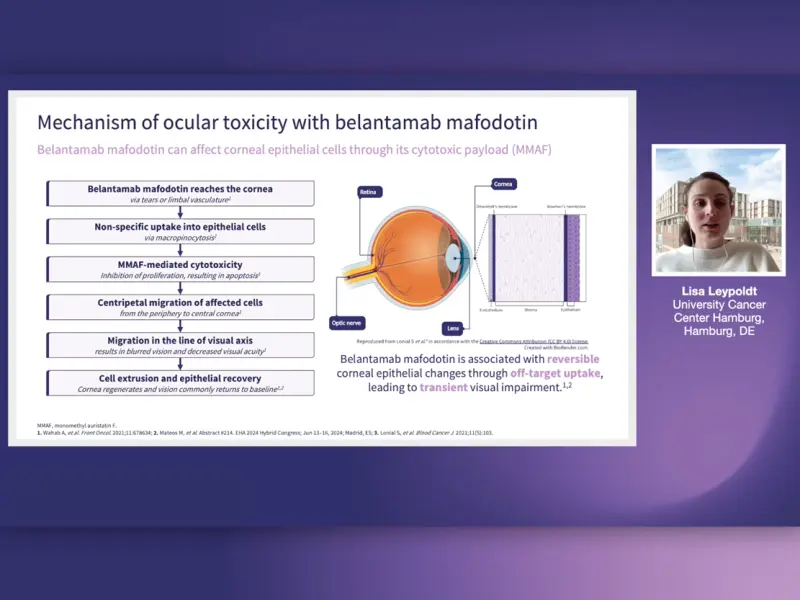
Belantamab mafodotin comprises an anti-BCMA monoclonal antibody conjugated to the microtubule inhibitor monomethyl auristatin F (MMAF).3 Belantamab mafodotin has a distinct safety profile, predominantly characterized by ocular toxicities as the most frequently observed AE, alongside immunotherapy-related adverse events.3–9 Ocular events associated with belantamab mafodotin are thought to result from off-target uptake of the ADC and intracellular release of the cytotoxic payload MMAF, leading to apoptosis of corneal epithelial cells. Ocular toxicities have been shown to be largely reversible across clinical trials, with improvements observed in 92–98% of patients at a median resolution time of 9–12 weeks.4,10
Ocular adverse events (AEs) are well characterized and can be managed through structured ophthalmic monitoring and dose modifications, including dose delays and reductions.11 Dose modifications can allow patients to remain on treatment to derive clinical benefit, potentially avoiding an early treatment switch, which may have implications for subsequent treatment sequencing.1,2,4,11–13 Understanding the relationship between dose modification, safety, and efficacy is crucial for optimizing belantamab mafodotin use in clinical practice.4,11
The recommended dosing schedules for belantamab mafodotin are 2.5 mg/kg once every 3 weeks (Q3W) when administered in combination with Vd and 2.5 mg/kg in Cycle 1, followed by 1.9 mg/kg Q4W from Cycle 2 onward when administered in combination with Pd, as used in the phase III DREAMM-7 (NCT04246047) and DREAMM-8 (NCT04484623) trials, respectively.1,2,11 Dose modifications are incorporated into the management of AEs, with guidance differing according to whether patients experience ocular toxicities or non-ocular AEs.1–3
Impact of dose modifications on safety with belantamab mafodotin
In the DREAMM-7 and DREAMM-8 trials, 88% of patients receiving BVd (N = 242) and 93% of those receiving BPd (N = 150) underwent a belantamab mafodotin dose delay, while 69% and 58% of patients, respectively, had a dose reduction.11 Protocol-recommended dose modifications were used to manage AEs, including ocular toxicities assessed using the Keratopathy and Visual Acuity (KVA) scale, with their effects on efficacy and safety evaluated in a post hoc analysis.11
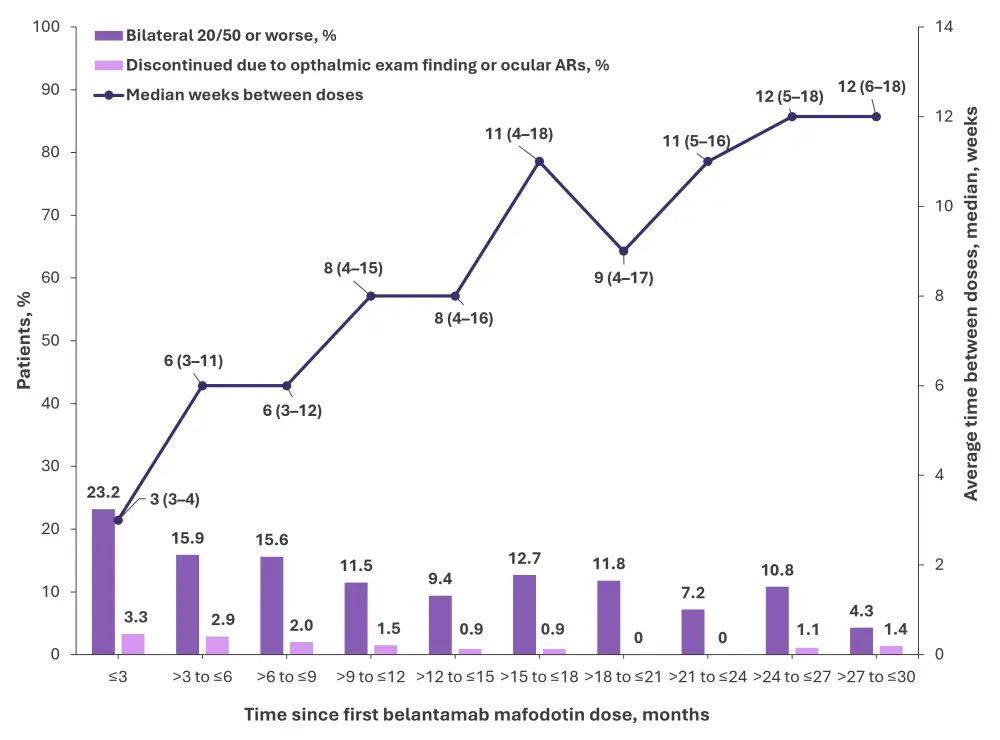
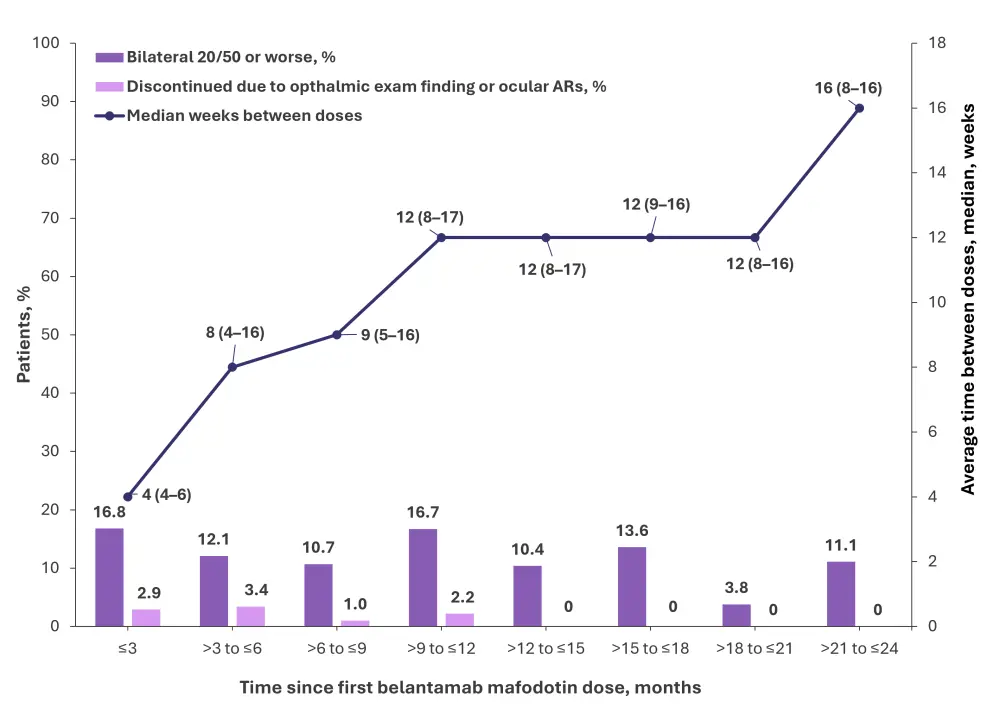
In the DREAMM-7 and DREAMM-8 trials, among patients with normal baseline best-corrected visual acuity (BCVA; 20/25 or better in ≥1 eye), the prevalence of a BCVA reduction to bilateral 20/50 or worse and ocular adverse reactions (ARs) were generally low, with the highest prevalence during the first 3 months of treatment (Figure 1A-B).11 Discontinuation due to ocular toxicity was generally low, occurring even more infrequently after the first few months in both trials.11 Among patients who discontinued treatment in DREAMM-7 or DREAMM-8, ocular events leading to discontinuation subsequently resolved in 15 of 22 and 14 of 14 patients, respectively.11 The reversibility of ocular toxicity following treatment interruption or discontinuation likely reflects the regenerative capacity of the corneal epithelium rather than permanent structural damage.4
Figure 1A. Median dosing interval and ocular events in DREAMM-7*
*Reproduced from Mateos, et al.11 in accordance with the Creative Commons Attribution Non Commercial No Derivatives (CC BY NC ND 4.0) license.
AR, adverse reaction.
Figure 1B. Median dosing interval and ocular events in DREAMM-8*
*Reproduced from Mateos, et al.11 in accordance with the Creative Commons Attribution Non Commercial No Derivatives (CC BY NC ND 4.0) license.
AR, adverse reaction.
Real-world data also provide evidence that dose intensity may influence the incidence and duration of treatment-related toxicities.14 In a retrospective study (N = 36), 75% of patients receiving belantamab mafodotin developed keratopathy of any grade and 33% developed Grade ≥3 keratopathy.14 Overall, keratopathy led to treatment discontinuation in 22% of patients.14 Following discontinuation, all patients reported subjective visual improvements.14 Among patients with ophthalmologic follow-up (n = 14), 50% showed complete keratopathy resolution and 50% showed improvements, with a median time to improvement of 75.5 days.14 Patients who received reduced-dose belantamab mafodotin (1.9 mg/kg) throughout the study experienced lower rates of Grade 3–4 keratopathy vs those who received the full 2.5 mg/kg dose (7% vs 52%; p = 0.004), as well as a shorter median time to resolution (62 days vs 137.5 days; p = 0.045).14 Any grade thrombocytopenia was lower with a reduced belantamab mafodotin dose vs the full dose (33% vs 67%; p = 0.048), and Grade 3–4 thrombocytopenia (7% vs 33%; p = 0.064) and any grade infections (13% vs 29%; p = 0.25) were also less frequent.14
Impact of dose modifications on efficacy with belantamab mafodotin
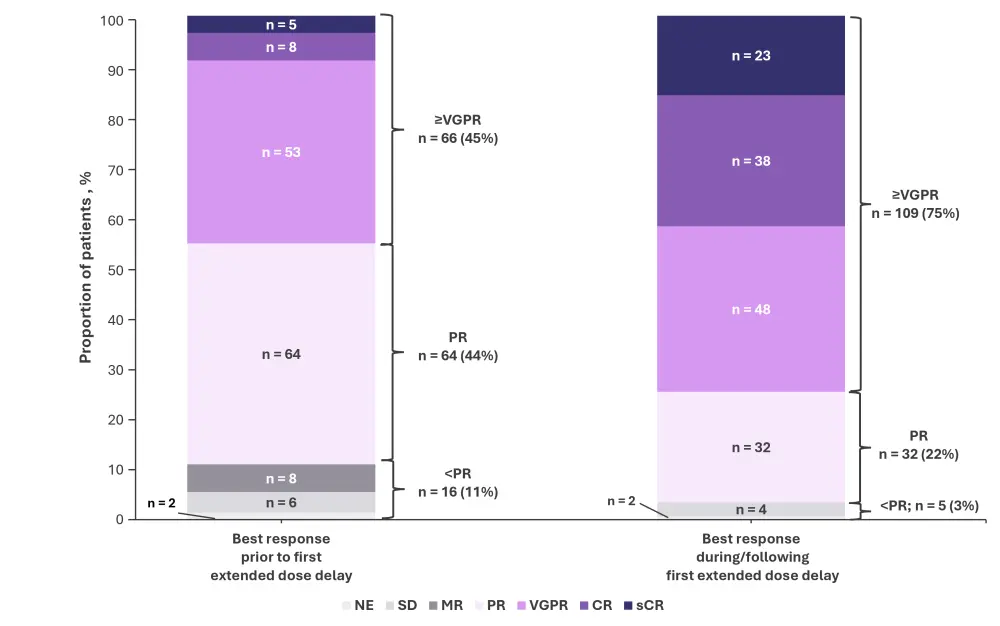
Given the frequency of dose modifications in DREAMM-7 and DREAMM-8, an important consideration is their impact on the efficacy of belantamab mafodotin.11 Dose delays were common among responders in both trials, with 97% and 99% of responders in DREAMM-7 and DREAMM-8, respectively, having a dose delay; 74% had ≥3 delays, with a median delay duration of ~8 weeks.11 Among patients requiring extended dose delays (>2 cycles; DREAMM-7, n = 146; DREAMM-8, n = 83), 89% of patients receiving BVd and 87% of patients receiving BPd had a PR or better prior to the first extended dose delay.11 In both DREAMM-7 and DREAMM-8, the proportion of patients achieving a very good PR or better (≥VGPR) increased during/following the first extended dose delay, including in patients who required an extended dose delay after 1–2 doses of belantamab mafodotin (Figure 2A–D).11
Figure 2A. DREAMM-7: Best responses prior to and during or following the first extended dose delay at any time*
*Reproduced from Mateos, et al.11 in accordance with the Creative Commons Attribution Non Commercial No Derivatives (CC BY NC ND 4.0) license.
CR, complete response, MR, minimal response; NE, not evaluable; PR, partial response; VGPR, very good partial response; sCR, stringent complete response; SD, stable disease.
Figure 2B. DREAMM-7: Best responses prior to and during or following the first extended dose delay after 1 to 2 doses*
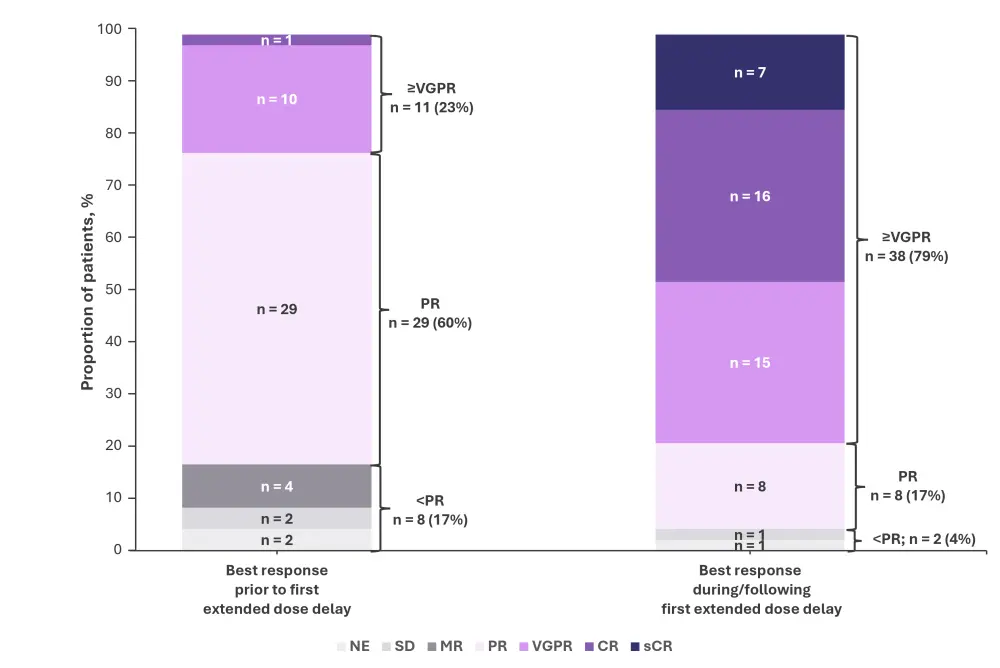
*Reproduced from Mateos, et al.11 in accordance with the Creative Commons Attribution Non Commercial No Derivatives (CC BY NC ND 4.0) license.
CR, complete response, MR, minimal response; NE, not evaluable; PR, partial response; VGPR, very good partial response; sCR, stringent complete response; SD, stable disease.
Figure 2C. DREAMM-8: Best responses prior to and during or following the first extended dose delay at any time*
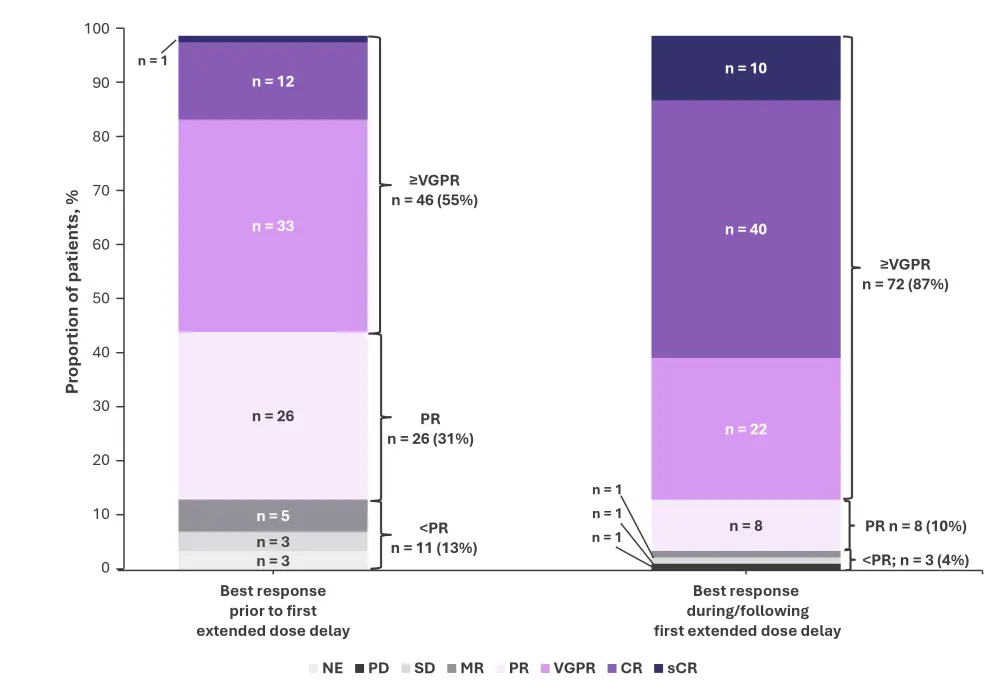
*Reproduced from Mateos, et al.11 in accordance with the Creative Commons Attribution Non Commercial No Derivatives (CC BY NC ND 4.0) license.
CR, complete response, MR, minimal response; NE, not evaluable; PR, partial response; VGPR, very good partial response; sCR, stringent complete response; SD, stable disease.
Figure 2D. DREAMM-8: Best responses prior to and during or following the first extended dose delay after 1 to 2 doses*
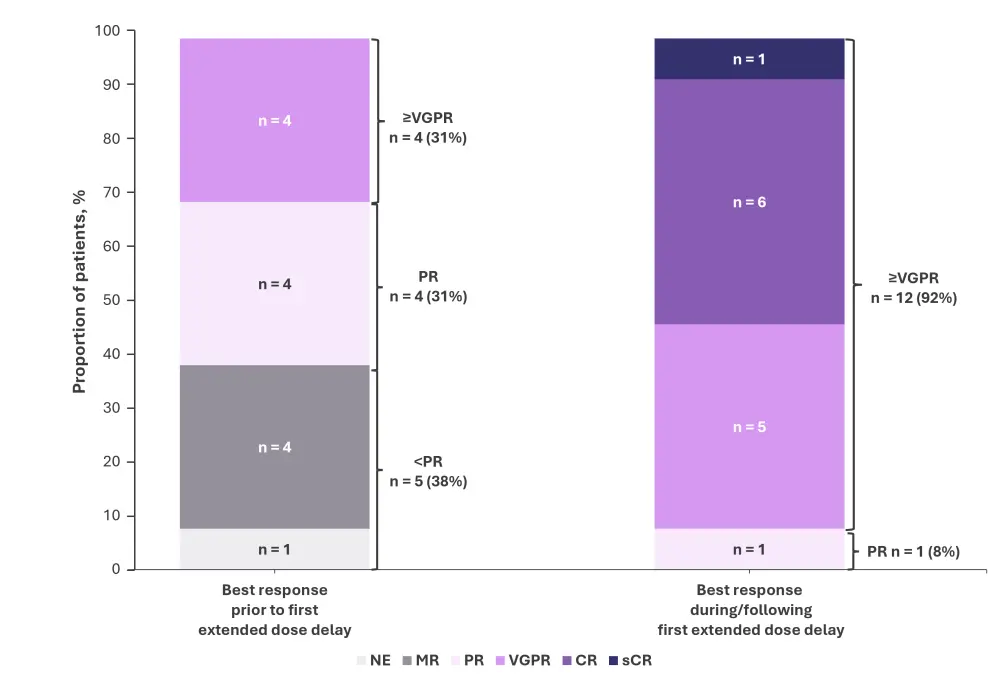
*Reproduced from Mateos, et al.11 in accordance with the Creative Commons Attribution Non Commercial No Derivatives (CC BY NC ND 4.0) license.
CR, complete response, MR, minimal response; NE, not evaluable; PR, partial response; VGPR, very good partial response; sCR, stringent complete response; SD, stable disease.
In patients requiring ≥1 extended dose delay of ≥12 weeks, median progression-free survival (PFS) was 36.6 months in DREAMM-7 (n = 146; 95% confidence interval [CI], 31.3–not reached [NR]) and NR in DREAMM-8 (n = 98).11 The estimated 12- and 18-month PFS rates were 91% and 81%, respectively, with BVd and 90% and 81%, respectively, with BPd.11
Real-world data similarly demonstrated that reducing the dose of belantamab mafodotin did not impact PFS (7.3 months with full dose vs 10.5 months with reduced dose).14 Median overall survival was 20.1 months in full dose cohort and NR in the reduced-dose cohort.14 In the reduced dose cohort, a PR or better was observed in 60% of patients vs 67% of patients in the full dose cohort.14
Taken together, these findings support the feasibility of managing treatment-related toxicities through belantamab mafodotin dose modification, enabling treatment continuity while maintaining treatment benefit in many patients.11,14
Future directions
Ongoing research is evaluating how belantamab mafodotin dosing and treatment schedules can be optimized to balance treatment exposure, efficacy and tolerability.15 The phase II DREAMM-15 trial (NCT07227311) is evaluating extended dosing of belantamab mafodotin in combination with standard-of-care regimens in patients with RRMM.15 Final analyses of the phase I DREAMM-9 trial (NCT04091126) of belantamab mafodotin in combination with bortezomib, lenalidomide, and dexamethasone in transplant-ineligible patients with newly diagnosed MM showed that higher initial dose intensity was associated with deeper responses, while extended dosing intervals during maintenance were associated with improved tolerability and maintained responses.16 Together, results from these studies may provide further insight into the relationship between treatment exposure, dose intensity, safety, and efficacy, and help inform future approaches to dose optimization.15,16 Continued multidisciplinary collaboration between hematology/oncology, eye care professionals, and nursing teams may also support timely identification and management of AEs.3,11 The development of ocular AE assessment tools, such as the vision-related anamnestic tool used in the phase II BelaRd trial (NCT04808037), which is being validated in the phase II ProMMise trial, may help hematologists better understand and manage ocular AEs in the future.4
Conclusion
Dose delays and reductions are common in belantamab mafodotin treatment and can form an important part of managing treatment-related toxicity while supporting treatment continuity, as demonstrated in the DREAMM-7 and DREAMM-8 trials.1–3,11 Ocular toxicity is a key consideration, though real-world data also suggest that dose modifications reduce the incidence of other toxicities, including thrombocytopenia and infections.11,14 Post hoc analyses from DREAMM-7 and DREAMM-8 indicate that ocular toxicities were generally manageable, with most Grade ≥2 ocular examination findings resolving, while the majority of affected patients continued belantamab mafodotin treatment.11 Among patients who responded to treatment, continued responses and durable disease control were observed despite frequent treatment interruptions and reduced dose intensity, including following prolonged dose delays.11 Overall, appropriate monitoring, timely dose modification, and multidisciplinary management may optimize the safety and efficacy of belantamab mafodotin while allowing patients to remain on treatment to derive clinical benefit where clinically appropriate.3,11
This educational resource is independently supported by GSK. All content is developed by SES in collaboration with an expert steering committee. Funders are allowed no influence.
References
Please indicate your level of agreement with the following statements:
The content was clear and easy to understand
The content addressed the learning objectives
The content was relevant to my practice
I will change my clinical practice as a result of this content
Your opinion matters
Regarding bispecific antibodies for multiple myeloma, which of the following AE mitigation strategies do you use most routinely in your practice?