All content on this site is intended for healthcare professionals only. By acknowledging this message and accessing the information on this website you are confirming that you are a healthcare professional. If you are a patient or carer, please visit the International Myeloma Foundation or HealthTree for Multiple Myeloma.
The Multiple Myeloma Hub website uses a third-party service provided by Google that dynamically translates web content. Translations are machine generated, so may not be an exact or complete translation, and the Multiple Myeloma Hub cannot guarantee the accuracy of translated content. The Multiple Myeloma Hub and its employees will not be liable for any direct, indirect, or consequential damages (even if foreseeable) resulting from use of the Google Translate feature. For further support with Google Translate, visit Google Translate Help.


The Multiple Myeloma Hub is an independent medical education platform, sponsored by AbbVie, Roche, Bristol Myers Squibb, Pfizer, GSK, Johnson & Johnson, Legend Biotech and Caribou Biosciences. Funders are allowed no direct influence on our content. The levels of sponsorship listed are reflective of the amount of funding given. View funders.
Now you can support HCPs in making informed decisions for their patients
Your contribution helps us continuously deliver expertly curated content to HCPs worldwide. You will also have the opportunity to make a content suggestion for consideration and receive updates on the impact contributions are making to our content.
Find out more
Create an account to access:
Bookmark & personalize site content
Receive alerts for new content in your areas of interest
View multiple myeloma content recommended for you
 Rakesh Popat
Do you know... Based on patient preference research, which of the following trade-offs have patients with multiple myeloma reported as being most acceptable when receiving effective therapy?
On March 5, 2026, the Multiple Myeloma Hub held a virtual symposium, titled Optimizing dosing of BCMA-directed therapies for improved quality of life in multiple myeloma. During the symposium, Rakesh Popat, University College London Hospital, London, UK, delivered a presentation on quality-of-life (QoL) considerations with B-cell maturation antigen (BCMA)-directed therapies in multiple myeloma (MM).
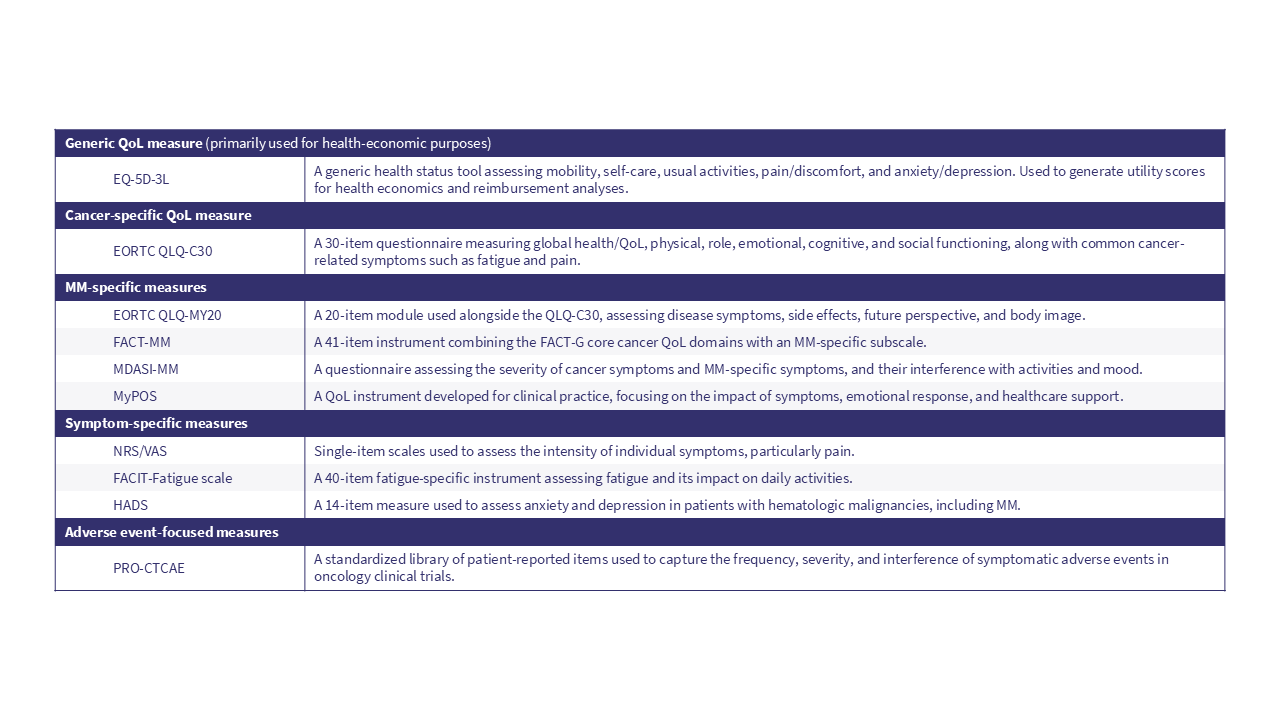
In this presentation, Popat discusses the importance of health-related QoL as a key clinical outcome in MM, particularly in the context of increasingly effective therapies. Popat emphasizes the need to balance efficacy and safety with QoL and outlines patient-, disease-, and treatment-related factors that influence QoL (Figure 1). Practical considerations, including treatment logistics, adverse events, and patient preferences, are also discussed, alongside approaches to assessing QoL (Figure 2) and incorporating shared decision-making into clinical practice.
Figure 1. Real-world determinants of quality of life in RRMM*
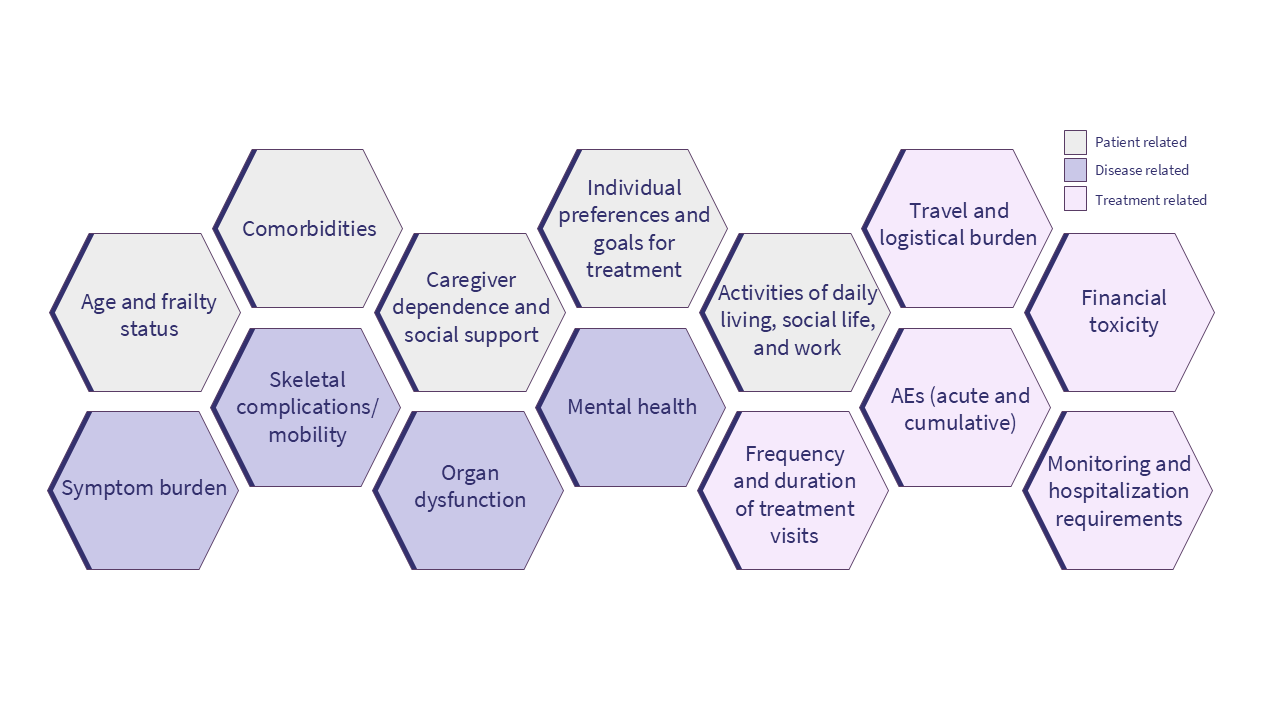
Figure 2. Methods of assessing QoL in MM*
Quality-of-life considerations with BCMA‑directed therapies for MM
Quality-of-life considerations with BCMA‑directed therapies for MM
Key points
- QoL is an important clinical outcome in MM, particularly as treatment efficacy has improved over time and patients are living longer.
- Treatment decisions require balancing efficacy outcomes, including response rates, depth of response, and survival, with safety, tolerability and QoL.
- Health-related QoL is commonly assessed using patient-reported outcome measures that capture symptom burden, physical function, and ability to perform activities of daily living.3
- Maintaining QoL and achieving symptom control have been identified as key goals by both patients and healthcare professionals.
- Overall QoL is impacted by patient-, disease-, and treatment-related factors.
- Patient-related factors include age, frailty, comorbidities, caregiver dependence, and individual treatment preferences.
- Disease-related factors include symptom burden, organ dysfunction, mobility limitations, and mental health.
- Treatment-related factors include frequency and duration of treatment visits, adverse events, and the need for monitoring and hospitalization.
- Logistical considerations, including travel requirements and access to specialist centers, may also impact QoL and place additional burden on patients and caregivers.
- Some BCMA-directed therapies require administration in specialized centers, which may necessitate prolonged stays near treatment sites and time away from usual activities.1
- Adverse events associated with some BCMA-directed therapies, including cytokine release syndrome, neurotoxicity, infections, and ocular toxicity, may impact QoL and require monitoring or hospitalization.1
- Treatment schedules and monitoring requirements may affect patients’ ability to work, maintain social activities, and manage caregiver responsibilities.
- Patient preference research indicates that overall survival is a primary treatment goal, followed by maintaining QoL and minimizing treatment burden.4
- Frequent monitoring for adverse events has been identified as the most acceptable trade-off for patients receiving effective therapy, whereas increased burden on caregivers is considered less acceptable.4
- Shared decision-making is key to align treatment choices with patient preferences and to individualize care.
- Multiple tools are available to assess QoL in clinical practice, and selection of the appropriate tool should be tailored to the clinical context.2
This independent educational activity was supported by GSK. All content was developed independently by SES in collaboration with the faculty. The funder was allowed no influence on the content of this activity.
References
Please indicate your level of agreement with the following statements:
The content was clear and easy to understand
The content addressed the learning objectives
The content was relevant to my practice
I will change my clinical practice as a result of this content
This content is accurate as of the date of publication and is not updated retrospectively. Please refer to the latest available evidence, guidelines, and relevant regulatory information when making clinical decisions.
More from this series:
Optimizing dosing of BCMA-directed therapies for improved quality of life in MM




Your opinion matters
Regarding bispecific antibodies for multiple myeloma, which of the following do you consider the biggest hurdle for patients and caregivers?