
All content on this site is intended for healthcare professionals only. By acknowledging this message and accessing the information on this website you are confirming that you are a healthcare professional. If you are a patient or carer, please visit the International Myeloma Foundation or HealthTree for Multiple Myeloma.

  TRANSLATE

The Multiple Myeloma Hub website uses a third-party service provided by Google that dynamically translates web content. Translations are machine generated, so may not be an exact or complete translation, and the Multiple Myeloma Hub cannot guarantee the accuracy of translated content. The Multiple Myeloma Hub and its employees will not be liable for any direct, indirect, or consequential damages (even if foreseeable) resulting from use of the Google Translate feature. For further support with Google Translate, visit Google Translate Help.

The Multiple Myeloma Hub is an independent medical education platform, sponsored by Abbvie, Roche, Bristol Myers Squibb, Pfizer, GSK, Johnson & Johnson, Legend Biotech and Caribou Biosciences. Funders are allowed no direct influence on our content. The levels of sponsorship listed are reflective of the amount of funding given. View funders.

Now you can support HCPs in making informed decisions for their patients

Your contribution helps us continuously deliver expertly curated content to HCPs worldwide. You will also have the opportunity to make a content suggestion for consideration and receive updates on the impact contributions are making to our content.

Find out more

Belantamab mafodotin in RRMM: Latest updates and practical considerations

By Jennifer Reilly

Share:

Featured:

Christoph RennerChristoph Renner

Sep 3, 2026

Learning objective: After reading this article, learners will be able to describe the efficacy and practical considerations associated with belantamab mafodotin-based combination therapy for relapsed/refractory multiple myeloma.


Do you know... Which mechanism is associated with the development of ocular toxicity during treatment with belantamab mafodotin?

The Multiple Myeloma Hub spoke with Christoph Renner, University of Basel, Basel, CH. We asked about the use of belantamab mafodotin-based combination therapy for relapsed/refractory multiple myeloma (RRMM). 

During this interview, Renner provides an overview of pivotal clinical data from the DREAMM-7 (NCT04246047) and DREAMM-8 (NCT04484623) trials that supported regulatory approvals of belantamab mafodotin-based combinations in RRMM and outlines practical considerations for their use in clinical practice. Renner discusses patient selection and treatment sequencing alongside other BCMA-directed therapies, as well as the monitoring and management of associated ocular toxicities. Renner draws on his experience in Switzerland and highlights the importance of multidisciplinary collaboration, particularly between hematology and ophthalmology, to support the management of ocular toxicities and inform treatment decisions.

Belantamab mafodotin in RRMM: Latest updates and practical considerations

Key points 

  • Belantamab mafodotin is a B-cell maturation antigen (BCMA)-directed antibody–drug conjugate carrying the microtubule inhibitor monomethyl auristatin F (MMAF), which is internalized following binding to BCMA and induces myeloma cell death through microtubule disruption and apoptosis.1,2 
  • The phase III DREAMM-7 and DREAMM-8 trials demonstrated improved progression-free survival and response outcomes with belantamab mafodotin-based combinations compared with their respective control regimens, alongside higher rates of measurable residual disease (MRD) negativity and sustained MRD negativity.3,4 
  • Results from DREAMM-7 and DREAMM-8, which supported regulatory approvals of belantamab mafodotin-based combinations in RRMM, have previously been reported on the Multiple Myeloma Hub. 
  • Belantamab mafodotin-based combinations have received regulatory approval for RRMM across multiple jurisdictions.  
  • The European Commission and Swissmedic approved belantamab mafodotin plus bortezomib and dexamethasone (BVd) after ≥1 prior therapy, and belantamab mafodotin plus pomalidomide and dexamethasone (BPd) after ≥1 prior therapy, including lenalidomide.5,6  
  • The FDA approved BVd after ≥2 prior lines of therapy, including a proteasome inhibitor and an immunomodulatory agent.7 
  • The optimal sequencing of belantamab mafodotin with other BCMA-directed therapies remains to be established, with the potential impact of prior BCMA-directed treatment on subsequent therapies requiring consideration.1 
  • Patient selection and treatment sequencing should be individualized, taking into account eligibility for other BCMA-directed therapies and available treatment options.8 
  • Belantamab mafodotin is associated with off-tumor/off-target ocular toxicity, including keratopathy that can affect visual function.1–4  
  • Ophthalmologic assessment before treatment administration can support the detection and grading of ocular toxicity and inform decisions regarding dose interruption, dose reduction, or treatment discontinuation according to severity.2 
  • Coordination between the treating team and ophthalmology services is important for the monitoring and management of ocular toxicity, including in outpatient settings.2 
  • As chimeric antigen receptor (CAR) T-cell therapies and bispecific antibodies move into earlier lines of treatment, the role and sequencing of belantamab mafodotin-based combinations should be considered within the evolving BCMA-directed treatment landscape.  

Updated data from the DREAMM-7 and DREAMM-8 trials were presented at the European Hematology Association (EHA) 2026 Congress, June 11–14, 2026, Stockholm, SE. The Multiple Myeloma Hub spoke with experts about the 4-year results from DREAMM-7 and subgroup analyses from DREAMM-8, including findings in patients with early RRMM and analyses of sustained MRD negativity. Explore the interviews below to learn more. 

EHA2026  | What are the updated 4-year results from the phase III DREAMM-7 trial in RRMM?

EHA2026 | What are the updated 4-year results from the phase III DREAMM-7 trial in RRMM?

During the EHA2026 Congress, the Multiple Myeloma Hub spoke with Vania Tietsche de Moraes Hungria, Clínica São Germano, São Paolo, BR. We asked, What are the updated 4-year results from the phase III DREAMM-7 trial in RRMM?
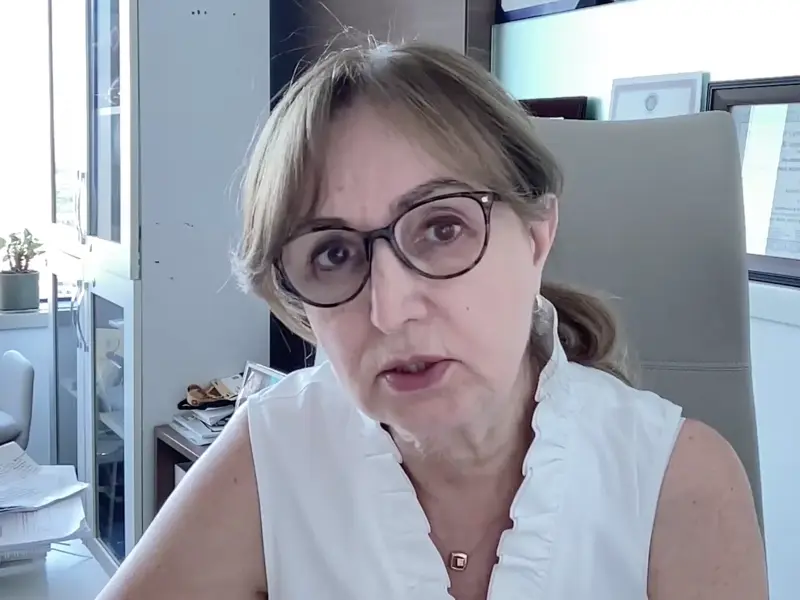
EHA2026 | DREAMM-8: Early RRMM and sustained MRD-negativity subgroup analyses

EHA2026 | DREAMM-8: Early RRMM and sustained MRD-negativity subgroup analyses

During the EHA2026 Congress, the Multiple Myeloma Hub was pleased to speak with Meral Beksaç, Istinye University Ankara Liv Hospital, Ankara, TR, about two subgroup analyses of the phase III DREAMM-8 trial.

This educational resource is independently supported by GSK. All content is developed by SES in collaboration with an expert steering committee. Funders are allowed no influence. 

References

Please indicate your level of agreement with the following statements:

The content was clear and easy to understand

The content addressed the learning objectives

The content was relevant to my practice

I will change my clinical practice as a result of this content

Your opinion matters

When administering bispecific antibodies for multiple myeloma, which of the following is your biggest concern?